
The Frugal Homemaker’s Guide to 6 Smart Ways to Shop on Amazon
In the late 1800s, a new way to shop arrived and forever changed how homemakers in the United States, and soon Canada, bought goods. Aaron Montgomery Ward, a shrewd businessman, published his first mail-order catalogue on August 18, 1872, with the vision to make his products available to shoppers across the United States, especially those who lived in rural areas.
Ward’s first catalogue featured 163 items, which is pretty impressive, seeing as everything was printed on just one piece of paper. By 1876, the catalogue boasted 152 pages and 3,000 items. Suddenly, everyone could order seeds, curtains, or new shoes and have them shipped right to their door. People loved shopping by mail, and soon, other companies began publishing catalogues of their own: Eaton’s in 1884 and Sears in 1888 were two other extremely popular mail-order companies.
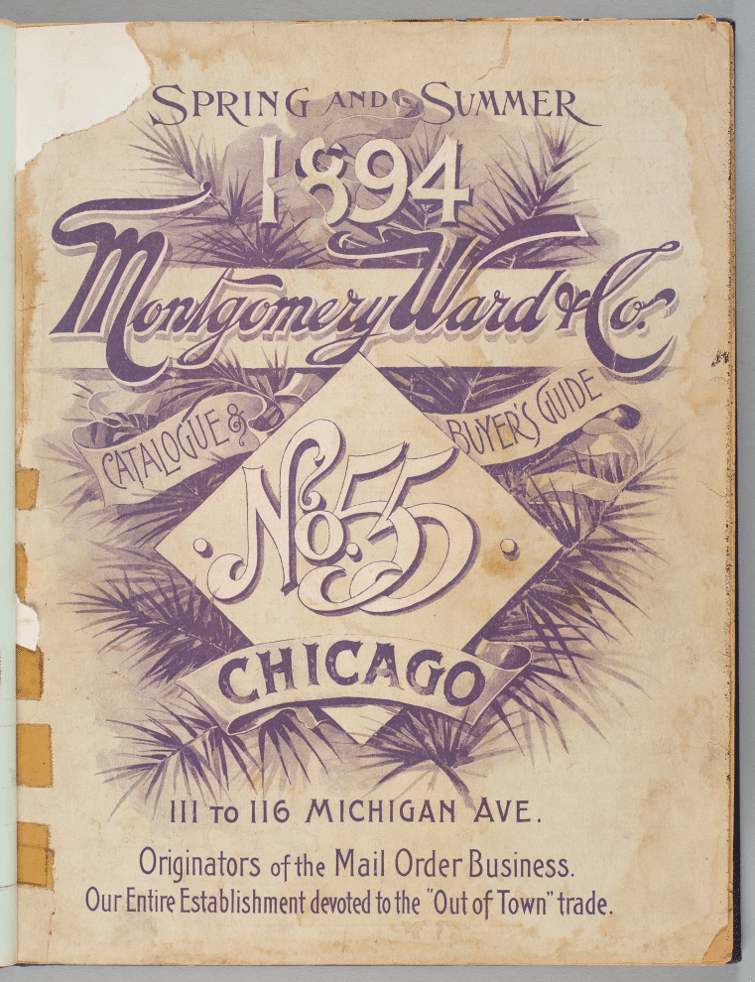
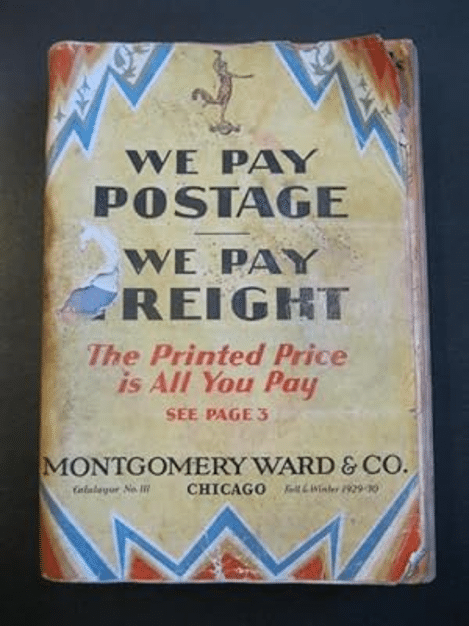
Catalogues grew in popularity as people spread out across the United States, and soon the post office began offering Rural Free Delivery, which made shopping for goods and supplies possible for those who might have lived a day’s trip or more away from an outpost general store. By the early 1900s, ordering by mail was an established part of the economy, and the increasingly thick catalogues were a household staple across the country.
But millennia before store catalogues made their debut, Mrs. Proverbs 31 was bringing her food “from afar,” sourcing the supplies that she needed for her home like the merchant ships that sailed the high seas, in search of quality goods at fair prices. Exactly how she did her shopping, I’m not sure, but it’s clear that she was adept at finding the supplies her family needed without squandering her time or finances.
For modern homemakers, merchant ships have been replaced with surfing the internet, and catalogues have largely been replaced with shopping apps. However, frugal homemakers are still on the search for the food, clothing, and furnishings that are required for maintaining a home and keeping the people living in it well cared for, while also being smart about the way they spend their time and money.
Webster's 1828 Dictionary defines frugal this way: "Economical in the use or appropriation of money, goods or provisions of any kind; saving unnecessary expense, either of money or of anything else which is to be used or consumed; sparing; not profuse, prodigal or lavish. We ought to be frugal not only in the expenditure of money and of goods, but in the employment of time."
With the advent of online mega stores like Amazon, it has never been easier to find and purchase the household items that we need, but with that ease also comes a great risk of wasting precious resources shopping for things we don’t truly need. As was catalogue shopping of days gone by, online shopping is a wonderful tool in the hands of a wise homemaker, yet as we all know, it’s a tool that can quickly get out of control if not used with knowledge and skill.
Wise, frugal homemakers can keep Amazon working to our advantage instead of it taking advantage of us. Let’s take a look at six smart ways to shop on Amazon that every homemaker needs to know.
Know Thyself (and your spending habits)
According to a 2023 survey of 44 states, Americans spent an average of $91.00 a month shopping on Amazon. This number seemed really low to me, and since it was a survey of people self-reporting their spending and not hard consumer data, I wondered whether people underestimated how much they spend each month.
I did a little more digging and found a likely more accurate accounting of how much the average American spends on Amazon from a 2026 report done by Capital One Shopping. According to their research, we spend, on average, $3231 annually, or $269.25 each month on the shopping site. Remember, this is an average; some people spend much less, and some people spend much more.
The difference between the amount people thought they spent when asked in a survey, and the amount people actually spent, as revealed in hard consumer data, is noteworthy. We all tend to underestimate how much money we are spending on things, especially if we are using a credit card and don’t have a spending plan.
Frugal Action Step #1: Track your Amazon spending! Look back through your bank or credit card statements and find out how much you’ve spent on Amazon month by month over the past three months.

Dig Into the Details (what exactly are you spending money on?)
As fun as shopping on Amazon may be, there’s nothing fun about getting a bill at the end of the month and realizing that you’ve spent a lot of money on things you don’t even remember ordering!
In the days of the mail-order catalogue, homemakers would have received only the occasional reminder of all that was available to buy. The catalogue would come by mail, and then, if she wanted to acquire an item, she would have to fill out an order form, send it back along with a check or money order, and wait weeks for her purchase to arrive. Shopping by mail order catalogue was, for most, a thoughtful, slow process.
Now, with online shopping, we have access to an endless feed of newer, prettier, more interesting things to add to our already overstuffed collections of all the stuff. This “catalogue” lives in our pocket, ready for split-second access whenever and wherever. And no longer do we wait weeks for our order to arrive; even in the rural area where I live, I can expect to have my parcel on my doorstep within a few days’ time.
A wise homemaker, though, doesn’t impulse buy. She shops with intention, and in so doing, she shops without regret. Commit to never opening Amazon “just to browse”; it’s a costly habit for your wallet and your time. Some call it “retail therapy”, but if it is that, it is therapy that comes with a steep price tag and causes more problems than it solves.
We must watch out for the little purchases. A book here, a cute photo frame there, a new pair of shoes you may not even wear, can add up to hundreds of dollars quickly. Research shows that the average consumer makes nearly ten impulse buys each month (across shopping mediums, not just Amazon). The average dollar amount for those purchases was $28.90, which doesn’t seem terrible until you add them all together and realize that you’ve spent a serious chunk of change on unplanned purchases.
Frugal Action Step #2: Look back through your Amazon invoices for the past thirty days. What did you spend your money on? Toilet paper? Supplements? The latest “must have” item that some influencer convinced you would make your life everything you’ve ever wanted it to be? While your financial statement shows you how much money you spent, invoices will show you exactly what you spent that money on. Do your receipts show that you impulsively bought things you didn’t need and perhaps haven’t used since they arrived?
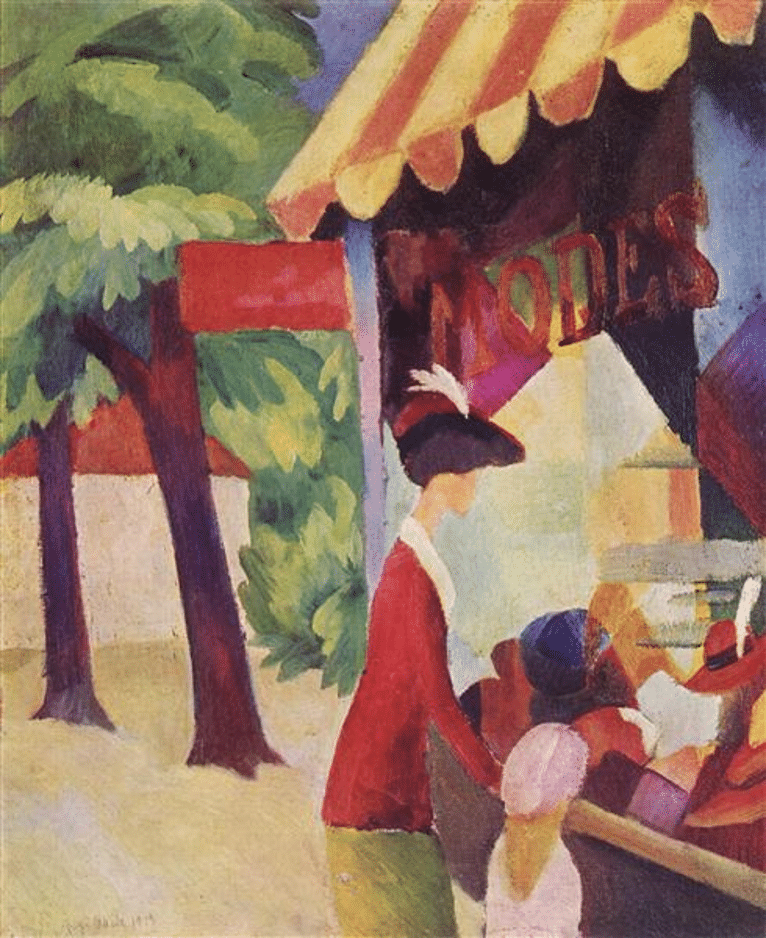
Woman in Front of the Hat Shop, August Macke, 1913
Let Friction be Your Budget’s Best Friend (make it harder to spend money)
The blessing of Amazon is that it is so easy to shop for the things that we need. The curse of Amazon is that it is so easy to shop for things we don’t need. Friction is the friend that helps us enjoy the blessing and avoid the curse.
Once you’ve taken an honest inventory of both the amount of money that you are spending on Amazon each month and what the money is being spent on, you’ll have a good idea of how much friction you need to add into your shopping habits.
- Spending out of control? Delete the Amazon shopping app from your phone. Keep a good old-fashioned list of things that you need to purchase, and only log on to your account from your desktop when you are prepared to shop.
- Small purchases adding up to big bills? Prime may be costing you more than just the monthly fee. My experience has been that it is much easier to spend money with a Prime membership, because there is no need to wait to have $35 worth of things in my cart before I check out.
- Buying stuff you feel you need, but still spending more than you planned? Consider loading a gift card every month with the dollar amount that you have budgeted for your Amazon spending. Setting up a gift card to automatically reload every month for a set amount has been a valuable guardrail for me, helping me to stay within the safety zone of my budget.
- A proclivity for procuring pretty things? Skip the home page with all those “recommended for you” and “explore more” suggestions, and go right to your personal page (the one with your order history) and search from there. I know how, when intending to buy something needful and specific, suddenly, an ad for something lovely, but unnecessary, catches my eye. Before I know it, I’m down the rabbit trail of looking at journals, then pens, then candles…and before I know it, I’ve got three things in my cart, and none of them are what I initially planned on buying.
Frugal action step #3: Choose at least one way to add some friction to your Amazon shopping before you make your next purchase. The easier it is to spend outside your budget, the more friction your shopping needs.
More Homemaking Posts You’ll Love


Do the Math (is a Prime Membership actually saving you money?)
I first signed up for an Amazon Mom membership, a program that is no longer available, when I became a first-time mom. I had two children in diapers at the same time, and I could get 20% off essentials like diapers and wipes, a savings which significantly offset the membership fee.
The annual fee at the time was $79 ($114 in today’s dollars), but it went up to $99 in 2014, and I no longer felt it was worth it for me, and cancelled. A Prime membership as of June 2026 costs $139/year, a cost that 74% of U.S.-based Amazon shoppers are willing to pay, profiting the company $49.619 billion annually. But is it worth it for you to pay for a Prime membership? It may be if:
- You regularly purchase gifts that you send to people at addresses other than your own, such as children and grandchildren.
- You own a business and need faster shipping for supplies. This is the reason that my husband and I currently have Prime. We paid for a year, and will reevaluate whether it is saving or costing us money before we renew when the annual fee comes due.
- You tend to preorder books. Whenever an author is getting ready to release a new book, they will encourage people to preorder their book, as that boosts book sales and visibility. Preordering is a nice way to support a favorite author, but if you don’t have Amazon Prime and the book is under $35, you’ll pay for shipping when the book is released, as it will ship automatically.
Over the several years that I didn’t have a Prime membership, I found that Amazon would usually offer me a free 30-day trial every 6 months or so, which I would take advantage of. This is a good time to observe whether your spending habits change when you don’t have to meet a minimum threshold for free shipping.
Frugal action step #4: If you currently have a Prime Membership, crunch some numbers and take a close look at whether it is costing you more than it is worth. If you cancel now, Amazon may offer you a prorated refund, or you can choose to continue using it for now and not have it renew at its expiration.
Take Full Advantage of Subscribe & Save (my favorite Amazon feature)
There are lots of reasons to love Amazon Subscribe & Save, including:
- No Prime membership is required.
- Coupons are often available – always check before your subscriptions ship. If there is a coupon available, you may need to start a new subscription and cancel your current one in order to take advantage of it.
- If you have five or more items coming at the same time, many items will have an automatic 15% savings, no coupon required.
- Never run out of consumables like toilet paper or shampoo.
- Amazon will send you an email with price change alerts and a reminder to check your upcoming delivery before it ships, which is helpful because it’s important always to check over your delivery before it ships and make sure that the price on anything hasn’t skyrocketed, and that you aren’t ordering pasta again when last month’s order is still in your pantry.
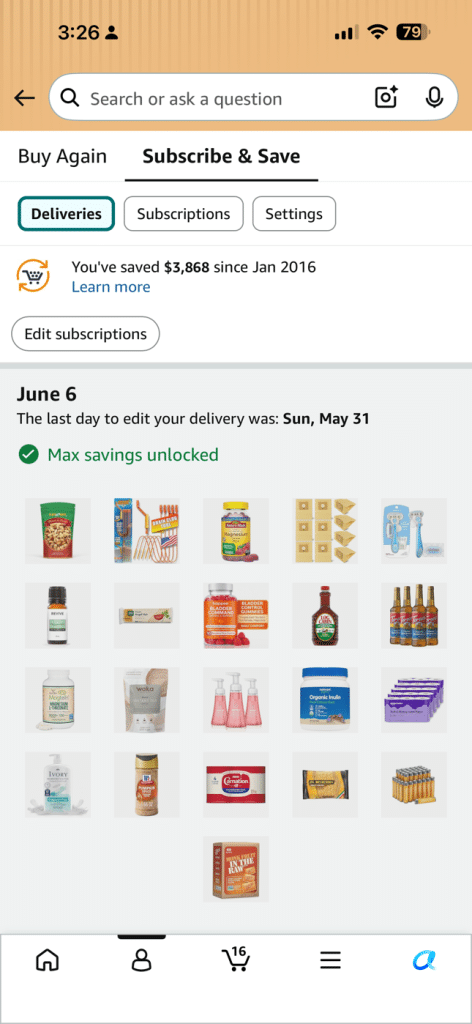
Frugal action step #5: If you haven’t already set up Amazon Subscribe & Save, take a look at items that you regularly buy, either on Amazon or at another store, and see if they are available for Subscribe & Save. Make sure to add at least 5 different items to your scheduled delivery in order to take full advantage of the maximum savings discount.
Be in the Know (about the lesser-known hacks for smart shopping on Amazon)
So far, we’ve talked about several features of Amazon shopping that most people are at least somewhat familiar with. But there are more ways that savvy, frugal homemakers can shop wisely, saving both time and money. Here are a few:
- Create lists. You can create an endless number of lists of things that you are interested in, but not ready to purchase. I have a running list for books, clothing, and gift ideas, to name a few. Creating lists protects me from impulse buying when I’m afraid that I will forget about an item that I want to remember in the future, but don’t have the budget for right now.
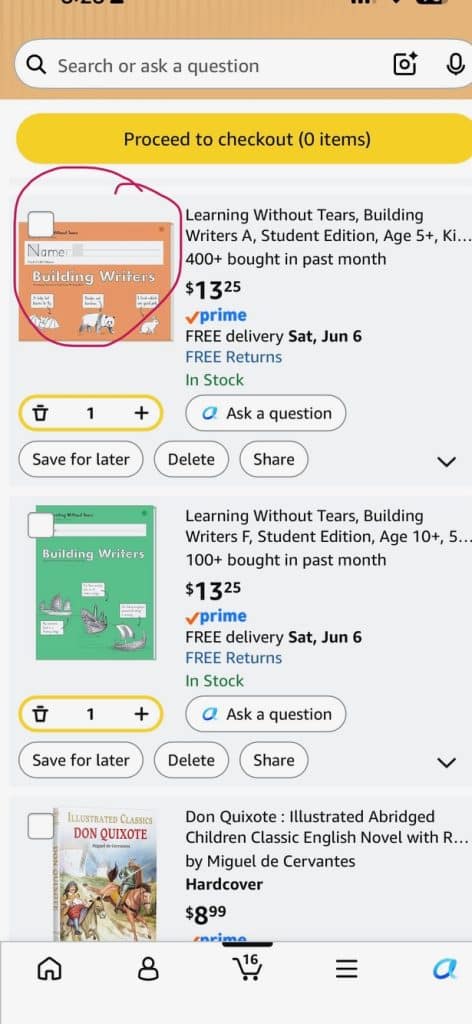
- Uncheck items in your cart that you plan to buy, but not today. I don’t know if this is a brand-new feature on Amazon, or if I just hadn’t noticed it before, but a couple of months ago, I realized that I can add things to my cart and uncheck the box next to the item so that I can pick and choose which things in my cart I order at any given time. I like to use this for things that I definitely want or need to buy, but either don’t have the budget for immediately.
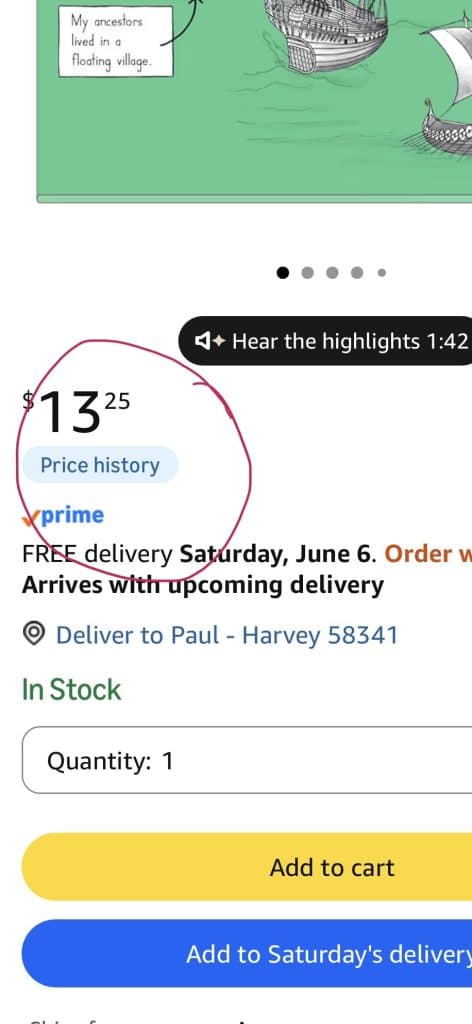
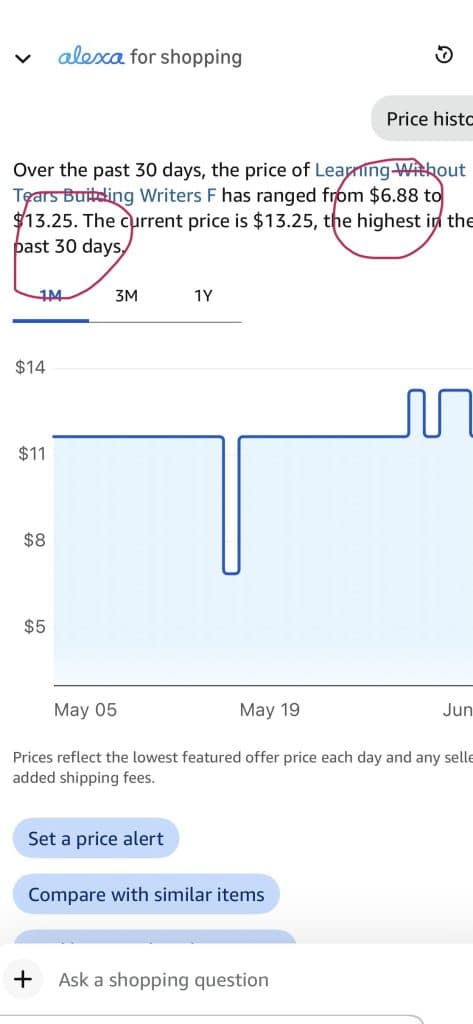
- Use the price check feature. Click on the “price history” button below the price on any item, and you’ll be able to see the price fluctuations over the past month, 3 months, or a year! This way, you can know whether you should jump on a deal or wait for the price to go back down.
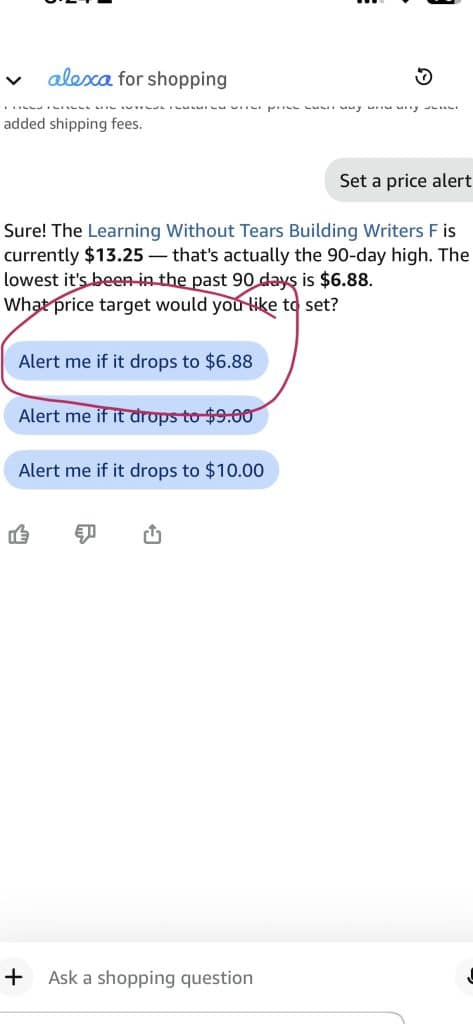
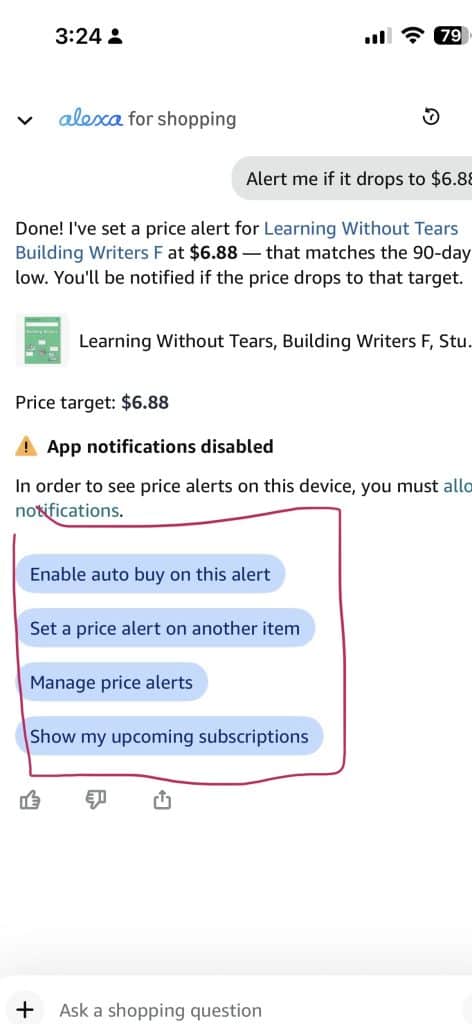
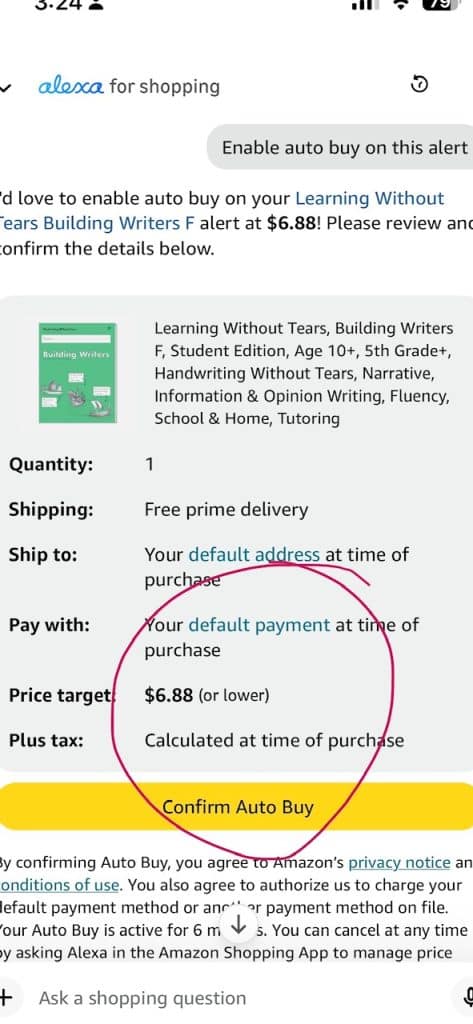
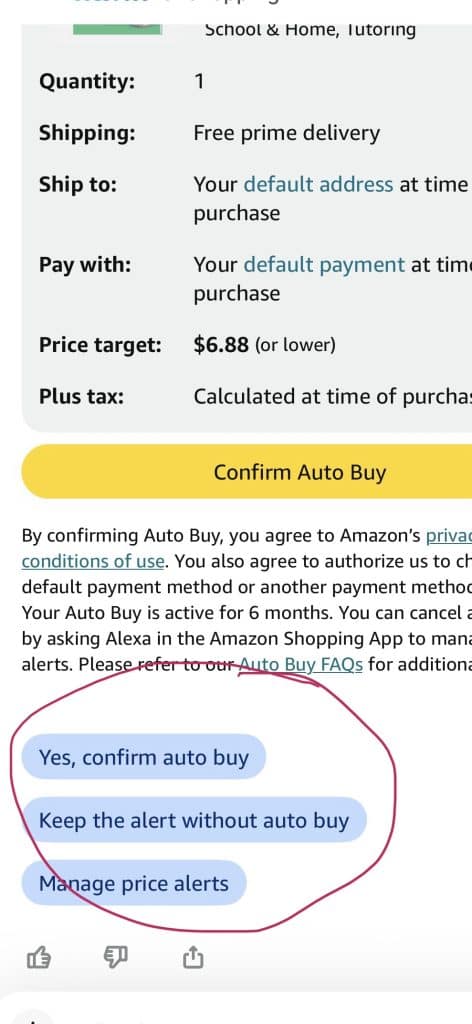
- Set a price alert and enable autobuy. This is another feature that I just recently discovered. Once you check the price history of an item, you can request to set a price alert. Once you do this, you’ll have the option of enabling auto-buy if the item drops to the amount you are willing to pay. I have done this a couple of times recently when I saw that something I was planning to purchase was currently higher than the typical price, and sure enough, the price went back down within a week or two, and the purchase automatically went through. Note: if you do NOT have Prime, and the amount is not over $35 dollars, then it would not be smart to schedule an autobuy. Instead, just request an alert if the price drops. You will need to have notifications enabled in order for this to work.
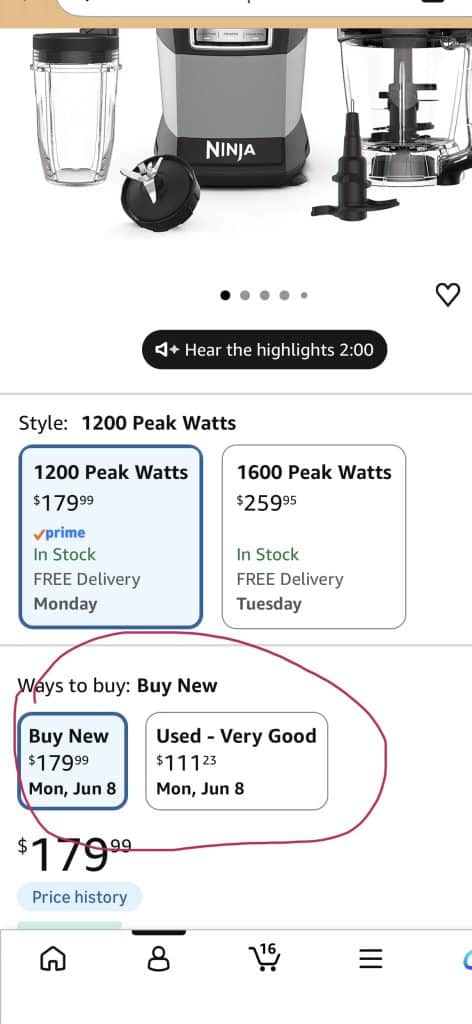
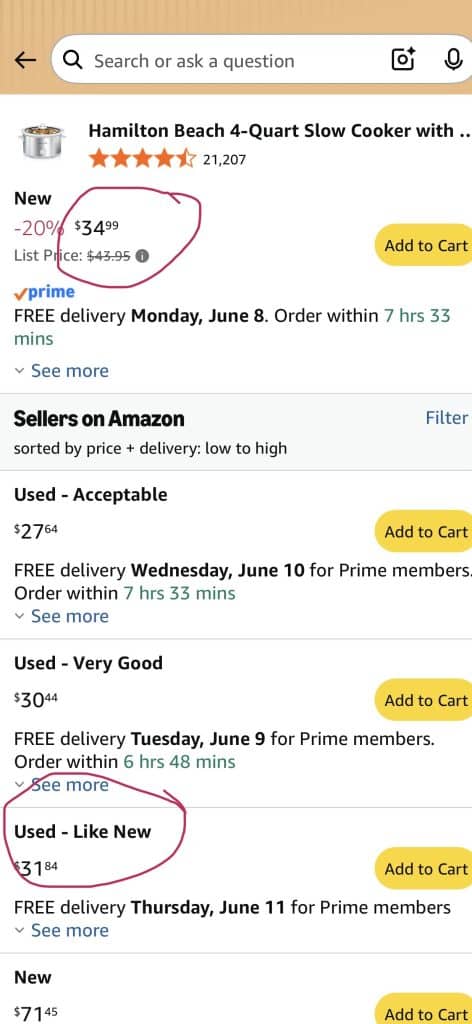
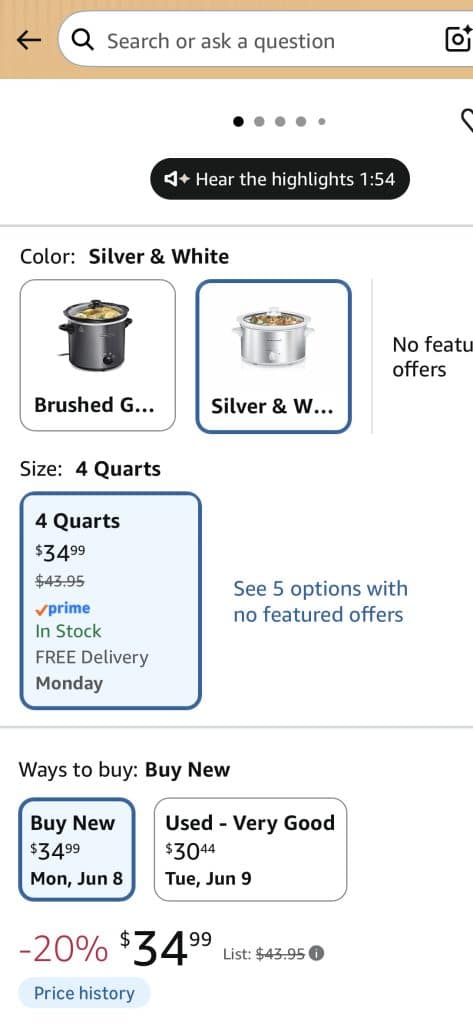
- Buy used on Amazon when it makes sense to do so. Most of the books I buy on Amazon I buy used, and it can often be a saving of anywhere from a few dollars to 75% off the original price. I’ve also bought Amazon returns like small appliances, shoes, and even a camping tent when the condition was “like new” or “very good” if the savings are significant enough. If it’s the savings of just a few dollars, I may pass, because there is always a chance that the item is not actually working properly (that was the case with a coffee maker I bought a year or so ago), but sometimes you can save a whole wad of cash if you are willing to buy used or a returned item. Remember that Amazon has a stellar return policy, so your risk is minimal, as long as you have the time to order again if the item didn’t work out.
Your journey to smarter shopping on Amazon starts right here
Just like mail-order catalogues changed the lives of homemakers several generations ago, online shopping has changed the lives of modern homemakers: whether for better or worse is up to us. With a bit of wisdom, intention, and savvy shopping skills, you can use tools like Amazon to master the art of frugal homemaking, saving both time and money as you manage your home and care for the lives God has entrusted to you, one smart shopping decision at a time.



Thanks, Cara for the helpful tips. Thankfully, I don’t have spending issues on Amazon, but you definitely gave food for thought and I may have to refer back to this for your overall tips.
Thanks for stopping by, Michelle!
Thank you for writing this! I am taking back control of my Amazon account! Your tips are very helpful.
Thanks, Dana! I’m glad you found this post helpful!
I need to go back and read more of this, but admittedly I try not to use Amazon (I know, I’m in the minority) – one thing that’s bothered me that I should mention b/c maybe it will be something to add to your post, is that I have found prices to be cheaper elsewhere sometimes and sometimes it’s a lot even when factoring in shipping. I know it can take a bit more time, but it’s been worth it to me to realize that sometimes the convenience just isn’t worth it. I agree about the prime membership – mostly it’s not worth it but it has been if I really needed something in a hurry that i couldn’t find locally!
Thanks, Adrienne! You make a really good point – it’s easy to assume that Amazon has the best prices, but that is not always the case! Especially on grocery items I like to for sure check the price on Walmart and maybe another online shop like Misfits Market.
Thanks for stopping by and leaving a comment!